
Automating Frontend Dependency Updates: How Depfu Compares to Dependabot and Renovate
by @eleanorhecks.bsky.social (@designerly.bsky.social) on , tagged guest-posts, dependencies, automation, comparisons, depfu, dependabot, renovate (share this post, e.g., on Mastodon or on Bluesky)
Dependency maintenance rarely shows up on a frontend roadmap, yet it competes for the same engineering time as feature work. A shared npm package can require separate lockfile changes, continuous integration (CI) runs, and reviews across several repositories. Multiply that work across a frontend stack, and routine upgrades become a steady drain on review capacity.
Depfu automates the update process and controls how often changes reach reviewers. Its fit alongside Dependabot and Renovate depends on where the code lives, which ecosystems the team supports, and how it manages pull request volume.
The Real Cost of Dependency Fatigue for Frontend Teams
Across several repositories, a single npm advisory can send engineers through multiple lockfiles to see which versions each project resolves. Meanwhile, routine upgrades compete for the same review time. OWASP recommends auditing project dependencies because many widely used npm packages have known vulnerabilities.
Risk also comes from packages several layers down the dependency tree. A 2025 analysis found that 6.93% of the npm package versions studied relied on at least one dependency with a known vulnerability. To apply a fix, engineers may first need to identify which direct dependency pulls in the affected version.
Update bots can monitor releases and open pull requests that run through existing CI, leaving engineers to prioritize fixes and evaluate breaking changes. A shared package upgrade can then surface build failures in each affected repository, where differences in tooling or configuration may require separate fixes.
What Depfu Is and How It Works
Depfu is a hosted service that tracks dependencies and opens update requests in GitHub and GitLab repositories. Teams can enable a scheduler that lets routine releases “mature” according to how often a package publishes, so newer versions can supersede pending updates. Depfu can also batch several upgrades into one recurring request, while security fixes skip the queue.
A hosted update service can become part of the review workflow across dozens of repositories, so the provider’s operating history matters. In an industry where half of new businesses close within five years, and about 65% shutter before year 10, stability is rare. Having launched years ago, Depfu has cleared that survival threshold, offering engineering teams a decade-long track record of stability and continuous adaptation to changing frontend tooling.
Weighing Depfu’s Strengths and Limitations
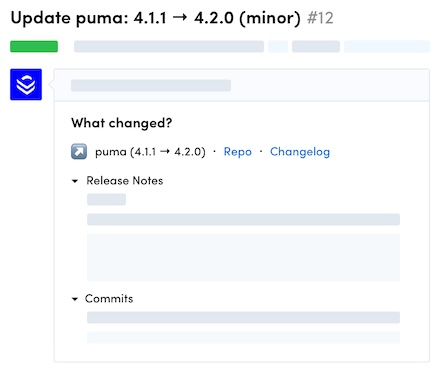
Depfu connects to GitHub or GitLab without a configuration file and offers a free tier for open-source and personal repositories. Batching reduces pull request volume, though a failed CI run can take longer to diagnose when several dependencies change together. It supports JavaScript, Ruby, PHP, and Elixir, so teams with other ecosystems or Git hosts may need a second tool.
Automated tests help catch regressions before a batch merges. AI-assisted testing can also generate test cases as changes come in and prioritize areas most likely to break. For instance, after a component library upgrade, visual regression tests can catch layout shifts that a passing build would miss.
Depfu’s optional delay for routine releases gives newly published versions time to draw scrutiny. The Open Source Security Foundation recommends a cooldown of roughly three days when updating dependencies without known vulnerabilities. That window gives researchers time to flag most malicious releases before teams adopt them.
How Depfu Compares to Dependabot and Renovate
For frontend teams, the comparison comes down to where their repositories live, how much setup each tool requires, and how tools control pull request volume. In a GitHub-only workflow, setup and review overhead may drive the choice, while teams working across platforms first need to check coverage.
Depfu vs. Dependabot for GitHub-Only Workflows
Dependabot is built into GitHub, so teams can enable it without installing a separate app. For routine version updates, teams specify which dependencies to group in dependabot.yml. Keeping those rules in version control makes changes to grouping policy reviewable alongside other repository changes.
Depfu requires connecting a hosted app, but teams can enable scheduled batches through its settings without editing YAML. Both tools open individual pull requests for routine updates by default. With Depfu, switching to a recurring batch lets teams concentrate routine reviews on a predictable day.
Depfu vs. Renovate for Multi-Platform Flexibility
Depfu keeps the setup simple through repository settings for GitHub and GitLab. Renovate also supports hosts like Bitbucket and Azure DevOps, and its coverage extends beyond npm packages to Docker images and GitHub Actions. That breadth can help teams consolidate update tooling when frontend code and deployment files live in separate repositories.
Renovate’s shared presets provide a starting point, but fine-grained policies take more work to define and maintain. For example, a team can group npm patch updates while sending Docker image updates through a separate review process. As repository-specific exceptions accumulate, teams need to check how those rules interact with the shared preset.
Choosing the Right Dependency Automation Approach
Depfu fits teams that prioritize simple setup and scheduled batches, while Dependabot keeps dependency updates within an existing GitHub workflow. Renovate is worth considering when a team needs a single update policy across multiple Git hosts or dependency types. Before choosing, teams can inventory their manifests, check platform coverage, and decide which updates their CI can validate together.
(At dxsrc, we accept guest posts as long as they aren’t predominantly AI-generated or promotional. While all guest posts are reviewed, we cannot and do not vouch for their accuracy, nor do we necessarily endorse recommendations made within them.)